
If a physician has ever placed electrodes on a patient’s skin to record the electrical activity of the heart, it is thanks to one man — Willem Einthoven. His invention, the electrocardiogram (ECG), has been used for over 100 years and remains one of the most widely utilized diagnostic tools in modern medicine.
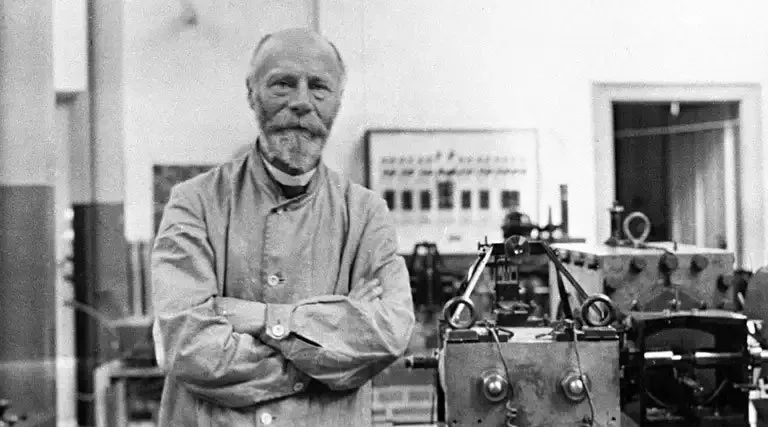
Einthoven became interested in the electrical activity of the heart after observing a demonstration of an early electrocardiographic device developed by British physiologist Augustus Waller. The device was based on a capillary electrometer, one of the first instruments capable of detecting electrical signals, consisting of a thin glass tube filled with mercury and sulfuric acid.
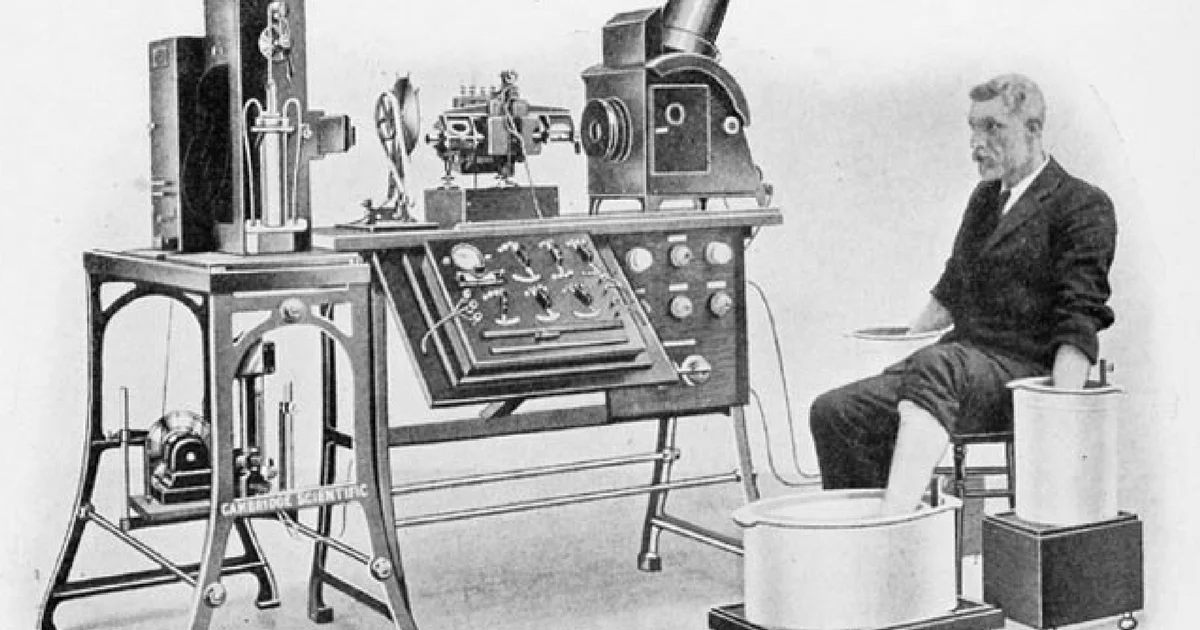
However, Waller’s device did not produce highly accurate recordings, so Einthoven developed an improved version known as the string galvanometer. It consisted of an extremely thin quartz filament coated with silver, capable of conducting electrical current generated by the heart. The filament passed between two electromagnets, causing it to move proportionally to the electrical signal.
In 1902, Einthoven made the first clinical recordings. The trace revealed a waveform consisting of three peaks and two troughs with each heartbeat. He introduced the now-standard labeling system using the letters P, Q, R, S, and T, which remains in use to this day.
Einthoven strongly believed that ECG would become an invaluable tool in clinical diagnostics. He identified different patterns in both healthy individuals and patients with heart conditions such as arrhythmias, heart block, and ventricular hypertrophy — a condition characterized by thickening of the heart muscle.
Although the medical community was initially skeptical about the usefulness of this technique, Einthoven’s work was ultimately recognized with the Nobel Prize in Physiology or Medicine in 1924.